What Are The Differences Between The Upper And Lower Duden Waterfalls?
The Upper and Lower Duden waterfalls are two separate attractions with two separate operators, two entry rules and two very different answers to the question of cost. This guide separates them.
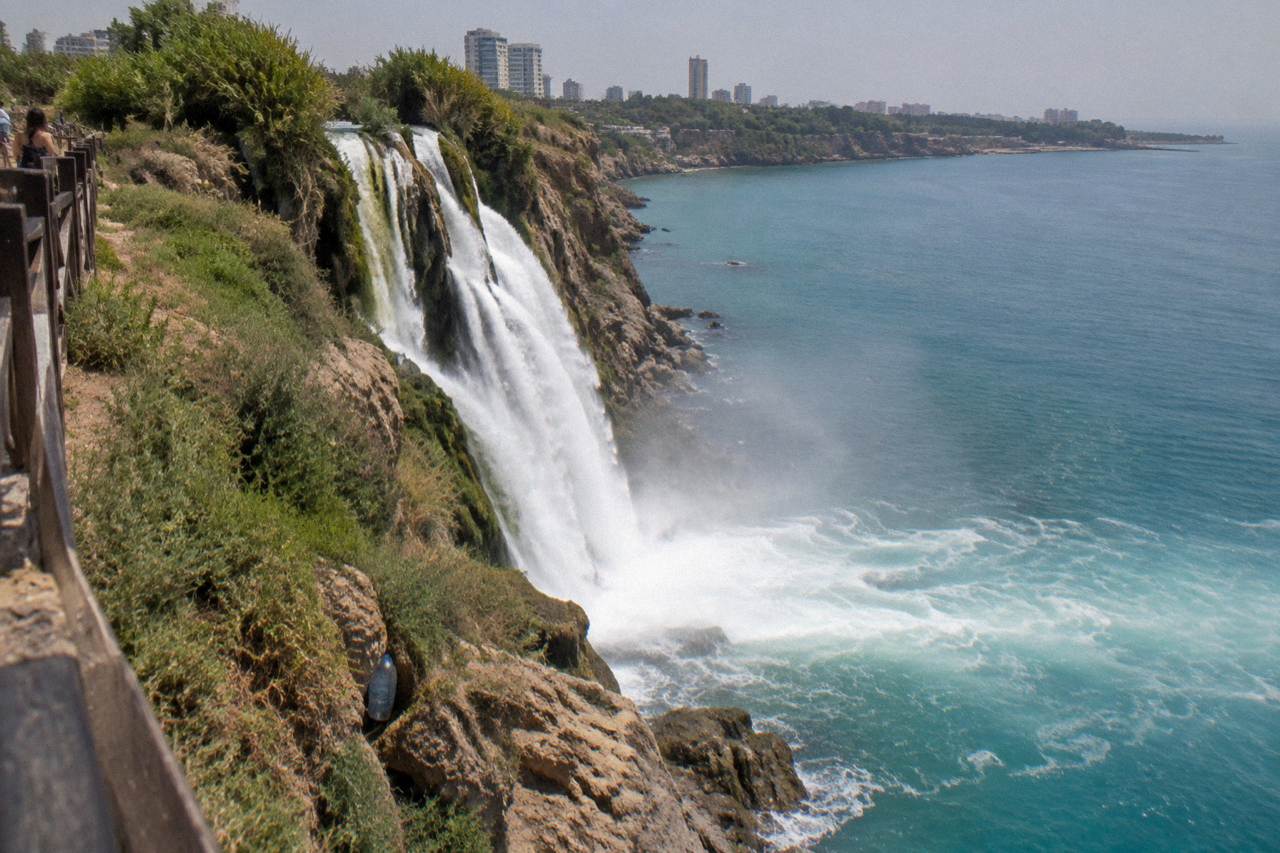
The Duden river reaches the Antalya coast in two separate places, and the two waterfalls that carry its name are run under two separate regimes. The Upper Duden Waterfall sits inland behind a fence and a ticket office. The Lower Duden Waterfall is the point where the river meets the Falez cliffs, and a municipal document puts that fall into the sea at 40 metres. Visitors regularly plan for one and arrive at the other, or assume a single ticket covers both, and no single ticket does.
The split matters most for cost. The Upper fall is a paid attraction: entry is by ticket, and no official page states a 2026 fee. The Lower fall is watched from the cliff-top Duden Park, where an official document names a facility at the park and states no fee for it.
The name is the root of the confusion. Both falls belong to the same river, both appear in visitor writing under the single word "Duden", and almost no casual source explains that the two sit kilometres apart under two different management regimes with two different answers to the money question. A traveller who reads one forum thread can easily come away believing there is one waterfall with one price. There are two, and the price question has two different answers.
Which Waterfall Is Taller?
Only one height figure appears in any official source: 40 metres, and it belongs to the Lower Duden's fall into the sea at the Falez cliffs. No official source prints a height for the Upper Duden, so no official comparison of which fall is taller exists, and visitors should not choose between them on height.
No official page gives a height for the Upper Duden Waterfall, so no figure appears here. The two falls are also different in kind, not just in size: the Upper fall is a river drop inside an inland park, while the Lower fall drops from the cliff edge at the coast, which is why the municipal document that names 40 metres is describing the Lower one and nothing else. Any second height you have read appears on no official page.
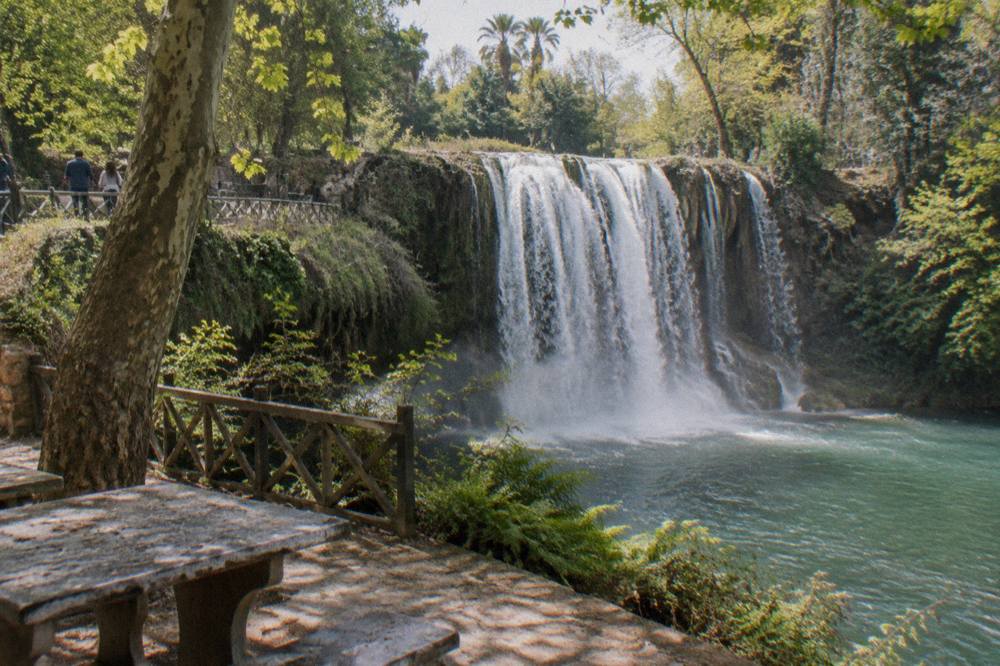
The 40-metre figure comes from the Antalya Metropolitan Municipality's own material on the Duden falls, and it is the only number in this article that answers the height question. Anything else you may have read about the Upper fall's drop is not on an official page, so treat it with caution. When a guidebook or a forum post gives a second height, ask which fall it means and which source it is quoting, because the two are swapped constantly in visitor writing.
The practical difference is bigger than the numbers. The Upper fall is part of a landscaped park where the river drops into a pool, and the whole area sits behind a fence with a ticket office. The Lower fall has no viewing arena of its own at all: what visitors see is the river leaving the cliff top and falling to the sea, watched from the public park above. One is a destination with a gate. The other is a viewpoint on a coastline.
Plan around the Lower fall for the dramatic drop, and treat the Upper fall as a park visit rather than a cascade of the same scale. The two experiences are different enough that a visitor who enjoys one may still enjoy the other, but they should not arrive at either expecting the same sight.
Which One Sits In A Park?
Both of them sit in parkland, but they are not the same kind of park. They have different operators, and the entry rules differ as well, so a ticket or pass for one will not automatically get you into the other.
If you are planning to visit, check the opening arrangements for each site separately before you set off. The Upper Duden Waterfall sits inside a fenced, ticketed park area run under the municipality's affiliates, and entry is by ticket. The Lower fall is watched from the cliff-top Duden Park, which is also operated under the municipality's affiliates, and no fee is stated for it on an official page. Neither park is run by the Ministry of Culture and Tourism, so MuseumPass and the Ministry's foreign-visitor price schedule do not apply at either gate.
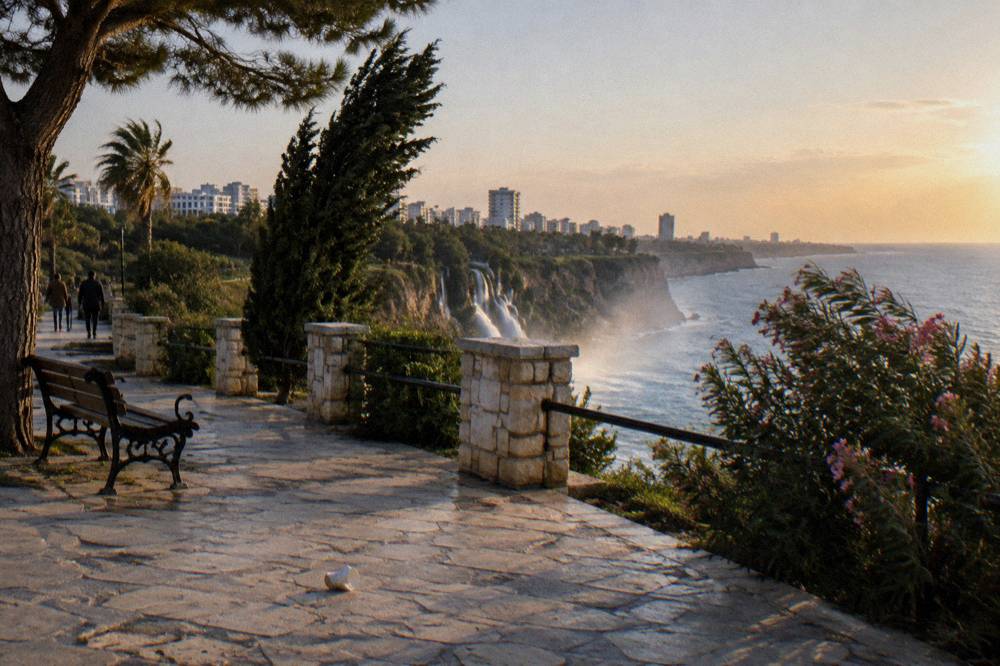
The Upper park's reported opening times are 08:00 to 19:00 from April to October and 08:00 to 18:00 from November to March, and those times come with the same warning as the fee: no official page confirms a 2026 schedule. The park is fenced, which is the structural fact that matters for planning. A fence means a gate, a gate means opening hours, and opening hours mean a visit can be planned around, or missed.
The cliff-top Duden Park is a different animal. It is a public green space along the Falez, the same stretch of coast that the Antalya Metropolitan Municipality's pages on the city's parks and coastline describe, and the facility named in the official document there states no fee. That is why the Lower fall's viewing is written as reported free rather than simply free: the official paper names a facility and gives no price, and a page that called it flatly free would be going beyond what any operator states.
The distinction runs through the whole Antalya coast, and it is worth learning once. Karaalioglu Park and Ataturk Park are free public parks. The old harbour edge is free to walk. The beach concessions at Konyaalti and Lara charge for loungers and umbrellas on their private stretches. The same city holds free parks and paid parks, and the Duden pair is the clearest example of the two sitting under one name.
Which One Is Free?
Neither option has an official price listed, but only one is reported to be free: the Lower Duden fall, which you can view at no charge from the cliff-top Duden Park. The Upper Duden Waterfall, by contrast, is paid, since it is fenced and entry is by ticket, though no official page states the 2026 fee. The official document naming a facility at the park lists no fee, so free viewing is reported rather than stated outright.
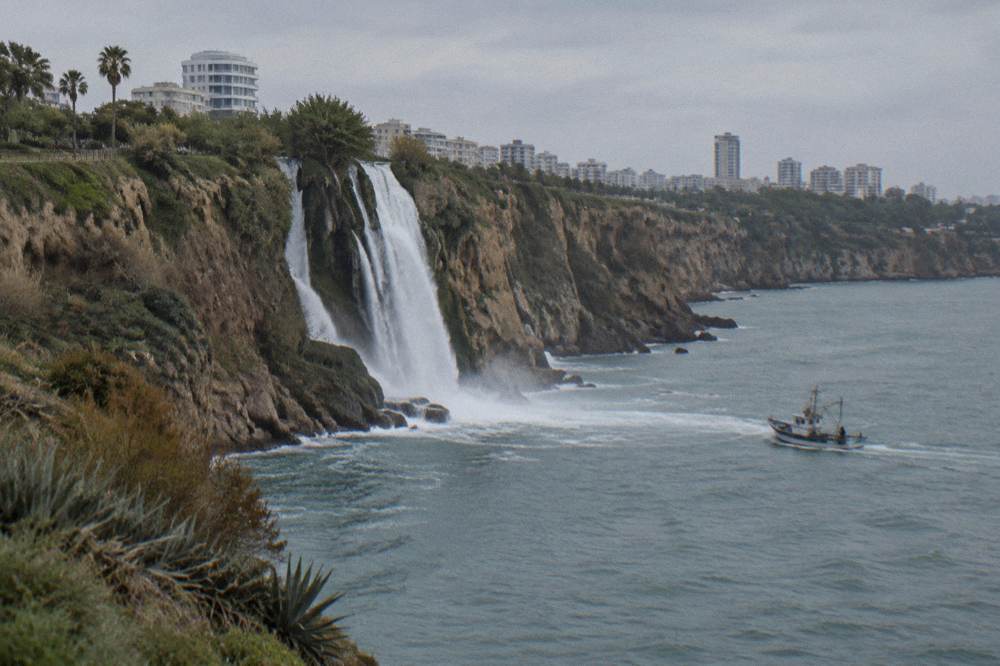
A conditionally-free place is never simply free, and the condition travels with the claim. The Upper fall fails the free test structurally: a fence and a ticket office are paid-attraction infrastructure, whatever the fee turns out to be on the day. The Lower fall passes a weaker test: the viewing is reported free, the reporting is consistent, and no official page contradicts it, but no official page confirms it either.
| Waterfall | Entry status | Fee on an official page | What that means for a visitor |
|---|---|---|---|
| Upper Duden Waterfall | Paid, fenced, entry by ticket | None stated for 2026 | Budget for a ticket; the amount is not published on an official page |
| Lower Duden Waterfall | Reported free from the cliff-top Duden Park | None stated; a facility is named with no fee | Plan on free viewing, and note it is reported, not stated on an official page |
The coast's other waterfall parks follow the same pattern of reported fees with nothing printed. Kursunlu Waterfall Nature Park is reported to charge entry, and Manavgat Waterfall is reported to charge entry, and no fee is printed for either and no opening status is stated. The pattern is consistent across the region: the water features are popular, the operators are real, and the 2026 prices live on signs at gates rather than on official pages.
For the wider budget picture, the paid ancient sites on the Ministry's schedule print their figures openly, unlike the waterfalls: Perge is EUR 11 for foreign adults, Aspendos is EUR 15, and the full schedule is in the Ministry's directive. Foreign children aged 8 and under are free at those Ministry sites. MuseumPass does not help at the Duden parks, because they are not Ministry sites, and the pass question is covered in full in the guide to whether MuseumPass is worth it in Antalya.
Which Is Better From The City?
From the city, the Lower fall is the better pick because it fits easily into a single day without extra planning, while the Upper fall works best as a planned trip with its own ticket budget. If you want a quick escape that costs little beyond the journey itself, choose the Lower fall.
The Lower fall's viewing park sits on the Falez cliffs by the sea, on the same coastline as the free public parks, so it combines naturally with a Kaleici morning and a harbour walk. The Upper fall is inland and ticketed, so it is a destination in its own right rather than a stop on a walking day, and the two should not be squeezed into one plan.
The guided walking tours on offer in Antalya cover the old town, not the waterfalls. Five free walking tours run in Antalya, four listed on GuruWalk and one on freetour.com, and all four GuruWalk walks are Kaleici old town circuits. None of them goes to the Duden river, the Falez or the coast road, so a waterfall visit is a self-planned add-on, not something a guide walks you to.
What the walks do cover, they cover well. The 1-Hour 30-Minute Tales And Trails walk, led by Mehmet, starts at Hadrian's Gate and is rated 4.99 out of 5 across 134 GuruWalk reviews; you reserve a free spot and pay the guide what you think the walk was worth at the end, and no official figure exists for that amount. See this free tour if the old town half of the day needs a guide. The other platform, freetour.com, lists one more walk, a 3-hour city centre tour led by Deniz Akgun from Balerin Cafe, which has no reviews yet; the hidden city centre free tour covers the city rather than the coast. For the waterfall half, the planning is yours: the Ministry's sites and the municipal parks are reached on the AntalyaKart tram and bus system, which is paid, and no fare is printed on an official page.
A sensible day keeps the two regimes apart. Spend the morning in Kaleici, where Hadrian's Gate, the Clock Tower and Republic Square, the old harbour edge and the bazaar streets are all free to walk or see, as the guide to Antalya's waterfalls and the old town pages set out. Move to the Falez in the afternoon for the cliff-top park and the reported-free view of the Lower fall. Save the Upper fall for a separate outing with a ticket budget and a fence to pass, and read whether the Lower Duden waterfall is free before you build the day around it.
Timing is the one planning detail no tour will handle for you, and here the honest state of the record is simple: no official page states seasonal flow, gate hours or a 2026 fee for either fall. What can be said is that the Upper fall is fenced and ticketed, while Lower Duden viewing is reported free, and that neither status is fixed in stone. Before travelling, check the municipality for current hours and any fee changes, since neither detail is published on an official page at present.
Two cautions close the planning picture. The Tunektepe cable car, which once gave a paid view over this same coastline, states on its own site that it is temporarily out of service for maintenance, and the page gives no reopening date and no fare, so no trip should depend on it. And the day boat trips from the old harbour are paid and separate from the free harbour walk, with no price printed anywhere on this site. The free coastline and the paid coastline sit side by side in Antalya, and the Duden pair is the cleanest example of the difference. For the full list of free sights, see Free Things To Do In Antalya.
Getting to the Lower fall on foot is straightforward once you know the line to follow. The cliff-top path along the Falez runs west from the old harbour area toward the fall, and the walk passes through the public parkland rather than any ticketed ground, so the whole route stays free. The AntalyaKart system covers the same stretch by tram and bus for anyone who would rather not walk it, and the card is the single paid piece of a day that is otherwise free. The Upper fall, by contrast, sits inland off the Duden river upstream, and reaching it means a bus ride out of the city centre plus the ticket at the gate, which is why it deserves its own day rather than a slot bolted onto a Kaleici itinerary.
A few practical notes make the walking half of the day easier to plan. The Tales And Trails walk starts at Hadrian's Gate, at the eastern edge of Kaleici, and the tram stops nearby. The 3-hour hidden city centre tour led by Deniz Akgun starts from Balerin Cafe, which is a longer commitment, so anyone combining a guided walk with an afternoon at the Falez should check the start time against the walking distance to the coast. Both tours work on the tip-only model, which means the only fixed cost of the guided part of the day is whatever you choose to hand the guide at the end.
For the self-planned waterfall half, the AntalyaKart card is the one purchase to sort out in advance. The card is the single paid piece of a day that is otherwise free, and it covers the tram and bus network that links the city centre to the stretch of coast where the Lower fall comes into view. Anyone who prefers to skip the card entirely can walk the whole way, since the cliff-top path along the Falez stays on public parkland from the old harbour area westward, and no part of that route passes through ticketed ground. The only point where money re-enters the picture is the Upper fall, which sits inland behind a ticketed fence and a bus ride, and that is exactly why it belongs on a separate day with its own budget rather than on the same itinerary as the free coastal walk.
The other three GuruWalk walks give you a fallback if the Tales And Trails timing does not fit your day, and all of them stay inside the old town, which means none of them eats into the afternoon you want to spend on the Falez. Because every one of the five tours in the city runs on tips rather than a fixed fee, you can book any of them without touching the budget you have set aside for the Upper fall's ticket and bus ride. If you would rather spend nothing at all on the guided half, the old town is compact enough to walk alone, and the free sights listed above sit within a short stroll of one another.
One last note on the shape of the day: the Upper fall, by contrast, is an inland, ticketed site that asks for a full block of time and its own fare, which is why the two should never share a single itinerary. Plan the free coastal day first, then give the paid waterfall day its own slot later in the week, and the difference between the two regimes stays clear from start to finish.
Common Questions About The Duden Waterfalls
What Are The Differences Between The Upper And Lower Duden Waterfalls?
The Upper Duden Waterfall is an inland, fenced, ticketed park attraction with no 2026 fee stated on an official page. The Lower Duden fall drops 40 metres into the sea at the Falez cliffs, and viewing from the cliff-top Duden Park is reported free, with no official page confirming a fee. Different operators, different entry rules, no shared ticket.
Is The Upper Duden Waterfall Free?
No. It is a paid attraction: fenced, with entry by ticket. No official page states the 2026 fee or a 2026 schedule, so budget for a ticket and check the price at the gate.
Is The Lower Duden Waterfall Free To See?
An official document names a facility at the park and states no fee, so plan on free viewing while knowing no official page states it outright.
How Tall Is The Duden Waterfall?
The only height figure on an official source is 40 metres, from the Antalya Metropolitan Municipality's material, and it describes the fall into the sea at the Falez cliffs, the Lower fall. No official page gives a height for the Upper fall.
Can One Ticket Cover Both Waterfalls?
No. The two falls sit under separate regimes, one ticketed and fenced, the other watched from a public clifftop park, and no combined ticket exists. MuseumPass does not apply at either, because neither is a Ministry of Culture and Tourism site.