Is Antalya Cheap Or Expensive?
A cost breakdown of Antalya: what is free, what the Ministry charges at the ruins, what transport costs, and the 1 percent hotel tax in 2026.
Antalya answers the cheap-or-expensive question differently depending on which door you are standing at. The city's core, the old town of Kaleici and its surroundings, is mostly free: a Roman gate, a public square, cliff parks, a working harbour edge and a bazaar that asks nothing for the looking. The paid layer sits mostly outside that core, at the Ministry of Culture and Tourism's ancient sites and at private beach and boat concessions. Between those two layers sits a small band of conditionally free things, mosques with dress rules and beaches whose free status is reported rather than printed on an official page. This article walks through each layer with the actual printed figures, and says plainly where no figure exists.
Is Antalya Cheap Or Expensive?
Antalya splits cleanly into two price layers. The old town, the parks, the harbour edge and the reported public beach stretches cost nothing, while the Ministry's ancient sites charge foreign adults between EUR 3 and EUR 15 and the only museum inside Kaleici charges TRY 80. The Antalya Museum is closed entirely. A guided walking tour costs whatever you decide to pay the guide at the end. Cheap for the outdoors, paid for the ruins.
That split is unusually legible compared with most resort cities, because the free layer is not scattered. Almost everything that costs nothing sits inside or beside Kaleici, the old town quarter, which has no gate, no ticket and no entry fee of any kind. If your day is built around walking, looking and swimming from a public stretch, Antalya behaves like a cheap city. If your day is built around Perge, Aspendos, Side or Phaselis, it behaves like a paid one, and the Ministry's foreign-visitor schedule, printed in euros, sets the price before you leave home.
The walking tours are the one place where the price is genuinely yours to set. Five free walking tours run in Antalya, four listed on GuruWalk and one on freetour.com. You reserve a free spot, you walk, and you pay the guide what you think the walk was worth at the end. No official figure for that payment exists anywhere, and none is printed here. The longest of the four GuruWalk old town walks is the 2-Hour 30-Minute Walk, Local Guide, led by Hakan and starting at Hadrian's Gate, rated 4.78 out of 5 across 73 GuruWalk reviews. For a fuller picture of how these walks work, see the companion piece on whether free walking tours are really free.
For planning a whole low-cost day in the old town, the guide to an old town Kaleici free day sequences the free sights, and this site, Free Things To Do In Antalya, carries the full breakdown by attraction. The rest of this article takes the cost question layer by layer: what costs nothing, what the museums and ruins charge, what transport costs, and the tax that lands on your hotel bill whether you notice it or not.
What Costs Nothing?
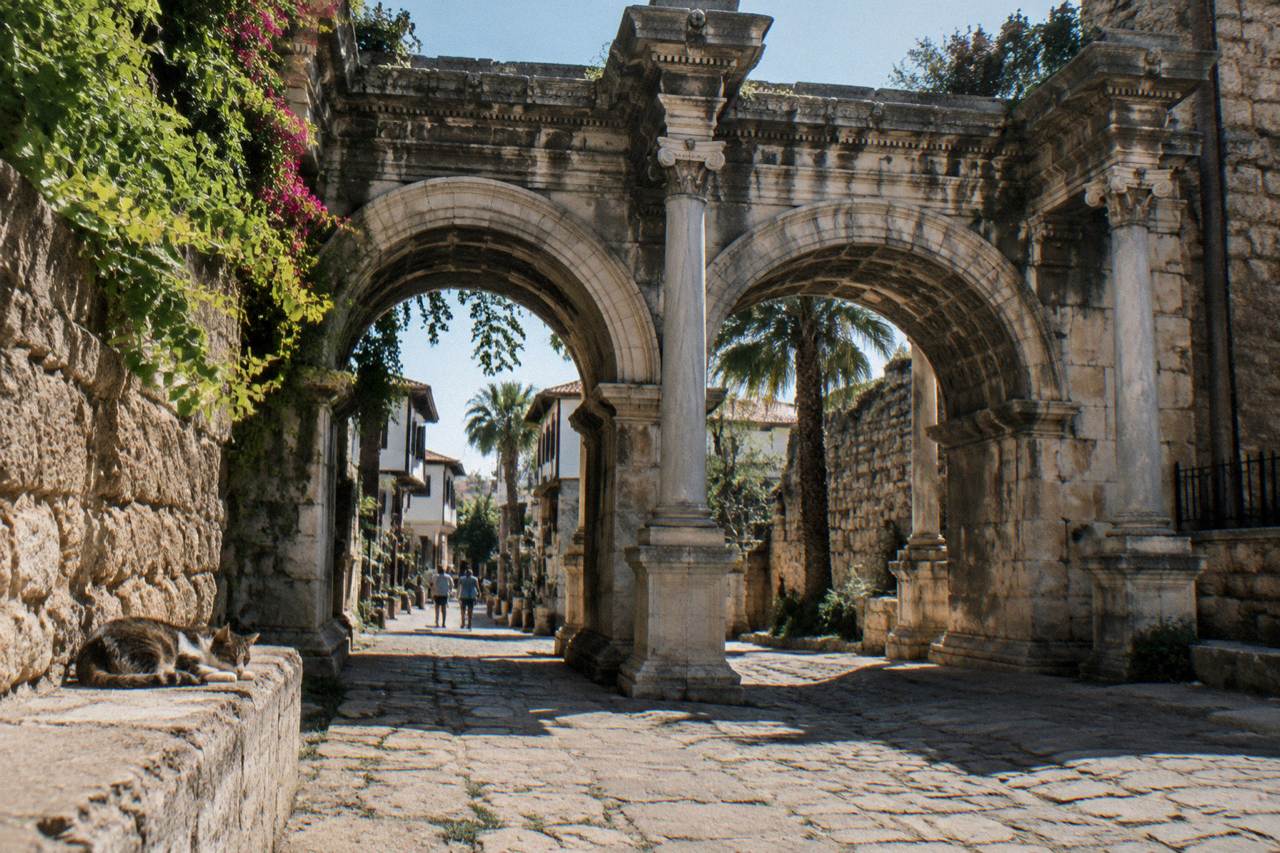
Hadrian's Gate, the Clock Tower and Republic Square, the Kaleici streets and bazaar, the old harbour edge, Karaalioglu Park, Ataturk Park and the outside of Hidirlik Tower all cost nothing to see or walk through. The conditions sit at the edges: mosques ask modest dress and exclude prayer times, the bazaar is free to wander but every purchase is paid, and the free public beach stretches are reported rather than stated on an official page.
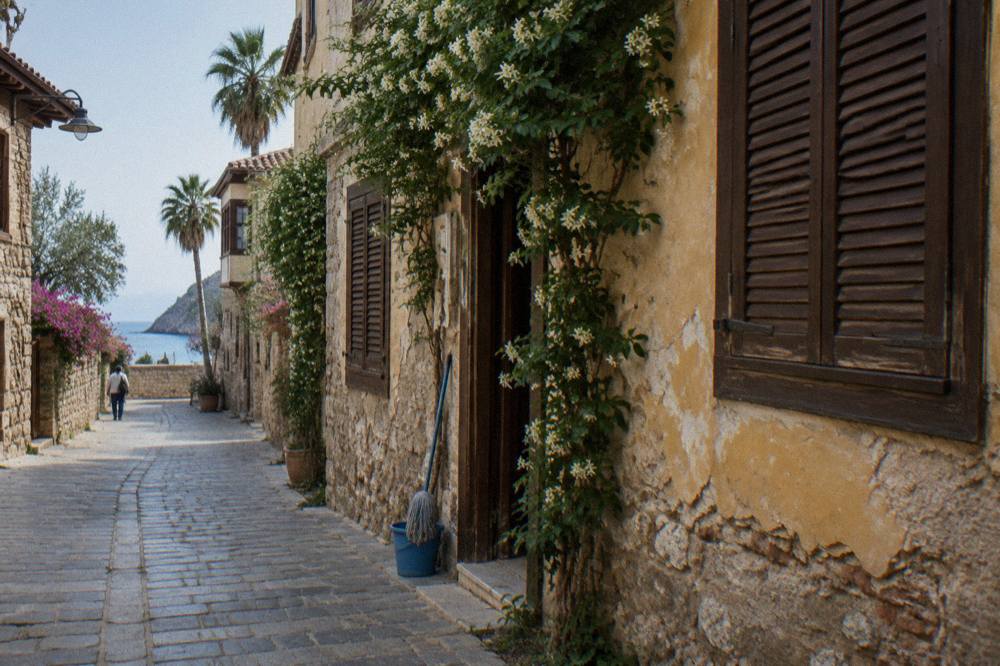
The free core is dense and contiguous. Hadrian's Gate is a street monument described on the Ministry's culture portal with no ticket office anywhere, and you walk through it as you would any city gate. The Clock Tower and Republic Square stand at the northern edge of Kaleici as public structures. The old harbour is free to walk around, including the Roman-era quay edge; the boat trips that leave from that harbour are a separate, paid product, and no boat price is printed anywhere on this site. Karaalioglu Park and Ataturk Park are free public parks, and the Falez cliff promenade between them is free to walk.
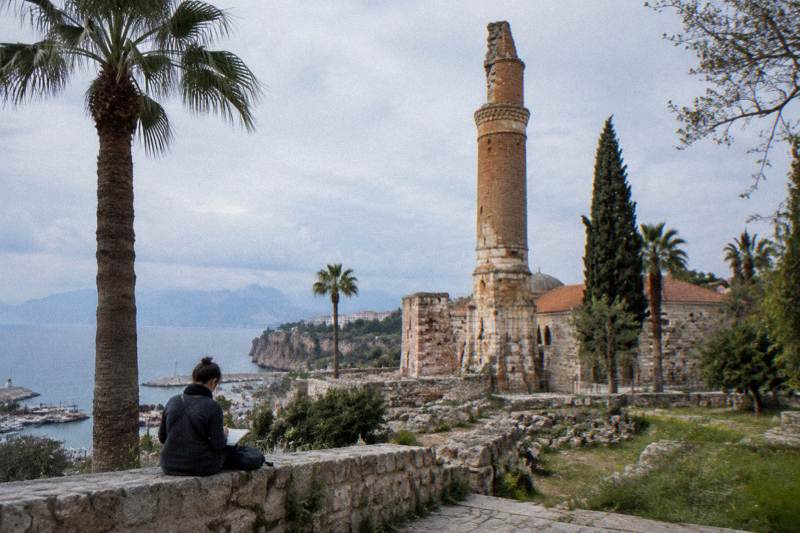
Three things in this layer carry conditions that must travel with the free claim. The mosques of Kaleici, including the Yivli Minaret complex, are free to enter as a visitor to a working mosque, which means covered shoulders and knees, a scarf for women, and no visiting during prayer times. The Kesik Minare, the Broken Minaret, has no stated entry rule or hours on any official page, so it is best seen from the Kaleici lane Hesapci Sokak. Hidirlik Tower's outside, in its open park above the Falez cliffs, is free; whether visitors can go inside is a question no official page answers, and nothing else about the interior is stated here.
At Konyaalti, the municipality lists a public beach on the coast, and sitting or swimming on the public stretch is reported to be free, though no official page states it; the 30-plus beaches run by private businesses along the same coast charge for loungers and umbrellas, and no sunbed price is printed. At Lara, a free public stretch is reported to exist, while hotel-fronted sections and clubs charge non-guests, with no non-guest fee printed and no stretch located. The five Falez public beaches named by Muratpasa Municipality, Inciralti, Engelsiz Kafe, Erdal Inonu Kent Parki, Erenkus and Konserve Koyu, carry no stated fee either way, so none of them is called free. Mermerli, the concession beach in the old harbour, is paid, with no price printed.
| Free thing | The condition that travels with it |
|---|---|
| Hadrian's Gate, Clock Tower, Republic Square | None: public street monuments and spaces |
| Kaleici streets and bazaar | Free to wander; anything you buy is a paid purchase |
| Old harbour edge | Free to walk; the boat trips from it are separate and paid |
| Karaalioglu Park, Ataturk Park, Falez promenade | None: public parks and promenade |
| Kaleici mosques and Yivli Minaret | Modest dress, scarf for women, no entry during prayer times |
| Hidirlik Tower | Outside free; interior access not stated by any official page |
| Kesik Minare | Visible from Hesapci Sokak; no entry rule or hours stated |
| Konyaalti public stretch | Free status reported, not stated on an official page |
| Lara public stretch | Reported to exist; location and non-guest fees not stated |
The pattern to notice is that the free layer covers everything you can walk through and look at in the open, and the charges begin the moment a fence, a lounger, a boat or a shop counter appears. That makes budgeting simple: build the walking days around the free core, and treat the paid layer as deliberate, priced excursions rather than surprises. If you are weighing the two main beaches against each other, the comparison of Lara or Konyaalti covers the free-access side of that choice.
What Do Museums And Ruins Cost?
Foreign adults pay the Ministry of Culture and Tourism between EUR 3 and EUR 15 at the ancient sites, on the Ministry's published schedule in euros. Three Ministry museums, the Mevlevihane, the Ethnography Museum and the Ataturk House Museum, are free on the Ministry's schedule. The Kaleici Museum is not Ministry-run: it charges TRY 80 for adults, TRY 40 for concessions, and MuseumPass does not apply. The Antalya Museum is closed to visitors, with no reopening date stated.
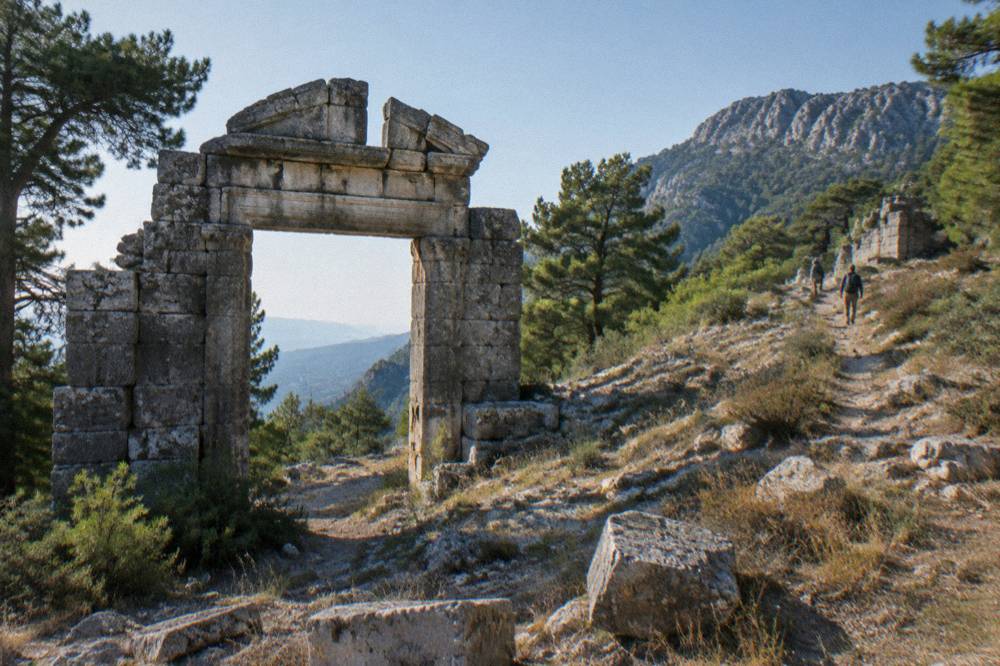
The Ministry's foreign-visitor schedule is the single price list for the ancient cities, and it is worth reading as one document rather than as scattered figures. Perge is EUR 11, open 08:00 to 19:00 every day with the ticket office closing at 18:30, and the ancient theatre inside Perge is temporarily closed for restoration, with no reopening date stated. Aspendos is EUR 15, open 08:00 to 22:00 every day with an audio guide, the longest day of any Ministry site near the city. Termessos is EUR 3 for the archaeological site, plus a national park fee that no official page confirms; no hours or open status are printed for it either. Side prints three figures: the museum at EUR 5, the archaeological site at EUR 7, and a single ticket at EUR 10, with the schedule noting the theatre is closed, and hours of 08:00 to 19:00. Phaselis and Olympos are each EUR 10, both open 08:00 to 19:00; no price for the Chimera, Yanartas, at Olympos is printed.
These prices apply to foreign adult visitors. Turkish ID-card holders fall under a different column of the same schedule, and the foreign price is never implied to apply to them. Foreign children aged 8 and under are free at Ministry sites. MuseumPass is accepted at the paid Ministry sites, in two versions printed by the directive: MuseumPass Turkiye at EUR 165 for 15 days and MuseumPass Mediterranean at EUR 90 for 7 days. If you are weighing that decision, the guide to whether MuseumPass is worth it in Antalya lays out the pass against the individual fares.
| Site or museum | Foreign adult price | Hours as printed |
|---|---|---|
| Perge | EUR 11 | 08:00 to 19:00 daily, office closes 18:30 |
| Aspendos | EUR 15 | 08:00 to 22:00 daily, audio guide |
| Termessos | EUR 3 for the site | No official page states the park fee. |
| Side Museum | EUR 5 | 08:00 to 19:00 |
| Side Archaeological Site | EUR 7 | 08:00 to 19:00 |
| Side single ticket | EUR 10 | Theatre closed per the schedule |
| Phaselis | EUR 10 | 08:00 to 19:00 |
| Olympos | EUR 10 | 08:00 to 19:00 |
| Mevlevihane Museum | Free | 08:30 to 19:00 every day |
| Ethnography Museum | Free | Hours not stated |
| Ataturk House Museum | Free | Hours not stated |
| Kaleici Museum (AKMED) | TRY 80 adult, TRY 40 concessions | Closed Mondays |
| Antalya Museum | Closed | No reopening date stated |
The city museums deserve their own sentence, because three different bodies run them and their rules never merge. The Ministry runs the Mevlevihane, inside the Yivli complex, free and open 08:30 to 19:00 every day, plus the free Ethnography and Ataturk House museums, whose hours and days no official page states. Koc University's AKMED runs the Kaleici Museum, paid at TRY 80 for adults and TRY 40 for concessions, free for people 65 and over, children 14 and under, disabled visitors and companions, ICOM and Koc members and press, and closed Mondays; MuseumPass does not apply there. And the Antalya Museum, the city's main archaeology collection, is closed to visitors, per the Ministry's own page, with no reopening date stated on any official page. The old EUR 15 fare still appears on the Ministry's schedule beside the word closed, and it is not a price anyone can pay today. For what to see instead, the guide on the Antalya Museum being closed lists the open alternatives.
The walking-tour layer connects to this section more than it might seem. All four cardable GuruWalk walks are Kaleici old town circuits, so none of them visits a ruin, a museum or a paid site, and none should be expected to. The differences between them are guide, duration, meeting point and review volume, and those are the honest grounds for choosing: the 2-Hour Old Town Walk led by Onur is rated 4.71 out of 5 across 399 GuruWalk reviews, the largest review pool of the four, while the shorter 1-Hour 30-Minute Tales And Trails led by Mehmet is rated 4.99 out of 5 across 134 GuruWalk reviews. All four cost the same: whatever you decide the walk was worth.
What Does A Tram Ride Cost?
Nothing in Antalya's public transport is free for a visitor. The tram and the buses run on the AntalyaKart card system, and the airport connects to the city by bus on that system or by shuttle, all of it paid. No official page prints a 2026 fare for any of these, so no figure appears here, and you should budget for a card and a top-up rather than expecting a free ride.
The AntalyaKart system is the payment layer for the city's trams and buses, including the airport connection, and it is the only practical answer to the getting-around question for a visitor without a car. No official page states what it costs, and no press-reported figure is printed as fact, so assume a paid card plus a paid top-up and check the current fare on the AntalyaKart site before travelling. The airport-to-city question is answered the same way: by bus on the AntalyaKart system or by shuttle, both paid, with no route number printed because no official page states one.
This matters for the cheap-or-expensive verdict because transport is the one cost layer where the free city core cannot help you. The free sights are walkable among themselves inside and around Kaleici, but the paid ancient sites, Perge, Aspendos, Termessos, Side, Phaselis and Olympos, all sit outside the city, and reaching them means paid transport on top of the Ministry's ticket. A day in Kaleici can genuinely cost nothing beyond food you choose to buy. A day at Aspendos cannot, and the gap is worth naming when you plan: the free layer is a walking layer, and the paid layer usually needs a bus, a car or a tour transfer.
The practical read is that Antalya rewards a visitor who splits the trip by geography. Base yourself near the old town and the free layer becomes your default day, with the AntalyaKart card held in reserve for the beach coasts and the airport runs. Reserve the paid excursions for the days you specifically want ruins, and price those days as ticket plus transport rather than ticket alone. No taxi price, no meal price and no shuttle price is printed anywhere on this site, because none was found on an official source, so those lines stay blank in your budget until you check them locally.
What Is The Hotel Tax This Year?
Turkey's accommodation tax on hotel stays is 1 percent from 1 May to 31 December 2026, down from 2 percent before that date. It is a tax on the hotel bill, not an attraction ticket, and it applies to paid accommodation rather than to anything you walk through or look at in the city. The rate and the window come from the Revenue Administration's own guide.
The change is a real one for 2026 trips. Presidential Decision 11263, published in the Official Gazette, cut the accommodation tax from 2 percent to 1 percent with effect from 1 May 2026, and the Revenue Administration's guide, on the Revenue Administration's site, prints the 1 percent rate through 31 December 2026. What the rate will be from 2027 is not stated in that document, so it is not stated here. On a hotel bill, the tax is a percentage of what you pay the hotel, which means the expensive part of an Antalya trip, the room, carries a small extra charge, while the free part of the trip, everything in the cost-nothing layer above, carries none.
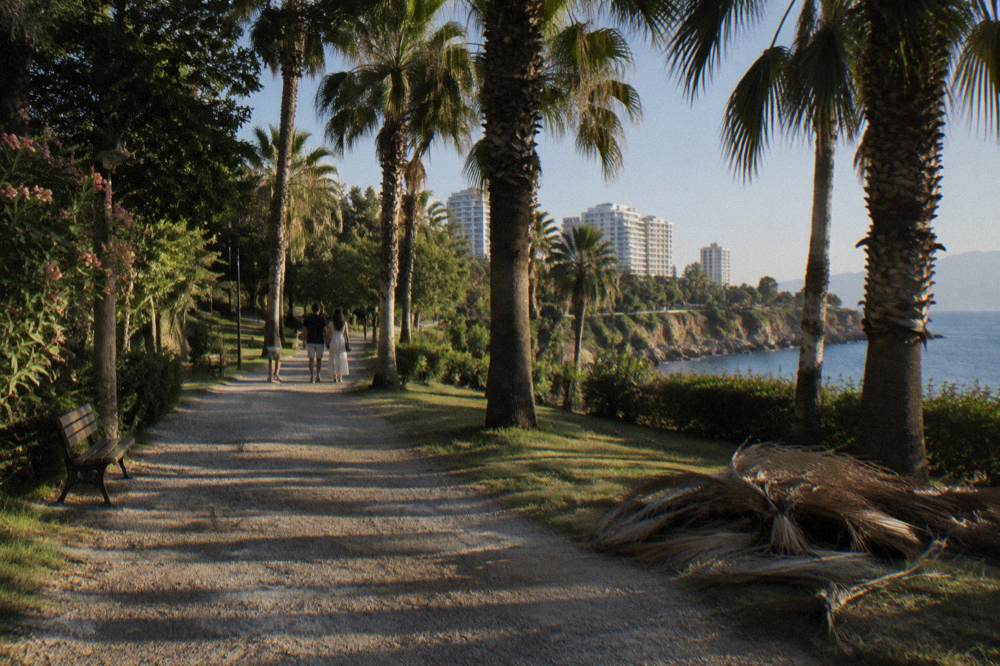
Putting the whole cost picture in one place: the free layer is genuinely free, the walking tours are pay what you want with no official figure, the Ministry's ruins run EUR 3 to EUR 15 for foreign adults with children 8 and under free, the Kaleici Museum is TRY 80, the city's Ministry museums are free, the Antalya Museum is closed, transport is paid with no printed fare, and the hotel bill carries a 1 percent tax through the end of 2026. The waterfalls follow the same split-and-state pattern: the Upper Duden Waterfall sits in a fenced, ticketed area with no 2026 fee or hours printed, the Lower Duden is reported to be viewable free from the cliff-top Duden Park but no official document confirms it, and Kursunlu and Manavgat are reported to charge entry with no fee printed. The Tunektepe cable car is paid and its ticket page states it is temporarily out of service for maintenance, with no reopening date.
That is the whole verdict. Antalya is a cheap city wrapped around a paid excursion list, and the two layers almost never overlap. If your days are Kaleici, the parks, the harbour and a public beach stretch, the city costs almost nothing beyond your bed and your meals. If your days are the Ministry's ancient sites, budget in euros per person per gate, and read the schedule before you go rather than at the ticket office.
Common Questions About Antalya Costs
Is Antalya Cheap Or Expensive?
Both, in cleanly separated layers. The old town, parks, harbour edge and reported public beach stretches cost nothing, the Ministry's ancient sites charge foreign adults EUR 3 to EUR 15, the Kaleici Museum charges TRY 80, and the Antalya Museum is closed. Walking tours are pay what you want.
What Costs Nothing?
Hadrian's Gate, the Clock Tower and Republic Square, the Kaleici streets and bazaar, the old harbour edge, Karaalioglu Park, Ataturk Park and the outside of Hidirlik Tower are all free to see or walk through. Mosques are free with modest dress and outside prayer times, and the Konyaalti and Lara public stretches are reported free but not stated on an official page.
What Do Museums And Ruins Cost?
Foreign adults pay EUR 11 at Perge, EUR 15 at Aspendos, EUR 3 at Termessos, EUR 5 to EUR 10 at Side, and EUR 10 each at Phaselis and Olympos, per the Ministry's schedule. The Mevlevihane, Ethnography and Ataturk House museums are free, the Kaleici Museum is TRY 80, and the Antalya Museum is closed with no reopening date stated.
What Does A Tram Ride Cost?
It is paid, like all visitor transport in Antalya. The trams and buses run on the AntalyaKart system and the airport connects by bus or shuttle, all paid, but no official page prints a 2026 fare, so no figure appears here. Check the current fare on the AntalyaKart site before travelling.
What Is The Hotel Tax This Year?
The accommodation tax on hotel stays is 1 percent from 1 May to 31 December 2026, down from 2 percent before that date, per the Revenue Administration's guide. It applies to the hotel bill only, and the rate from 2027 is not stated in the document.