What Is The Entrance Fee For Perge?
Perge charges foreign adult visitors EUR 11 on the Ministry of Culture and Tourism's published schedule, with the ancient theatre inside closed for restoration. Here is what that fee covers, who pays it and who does not.
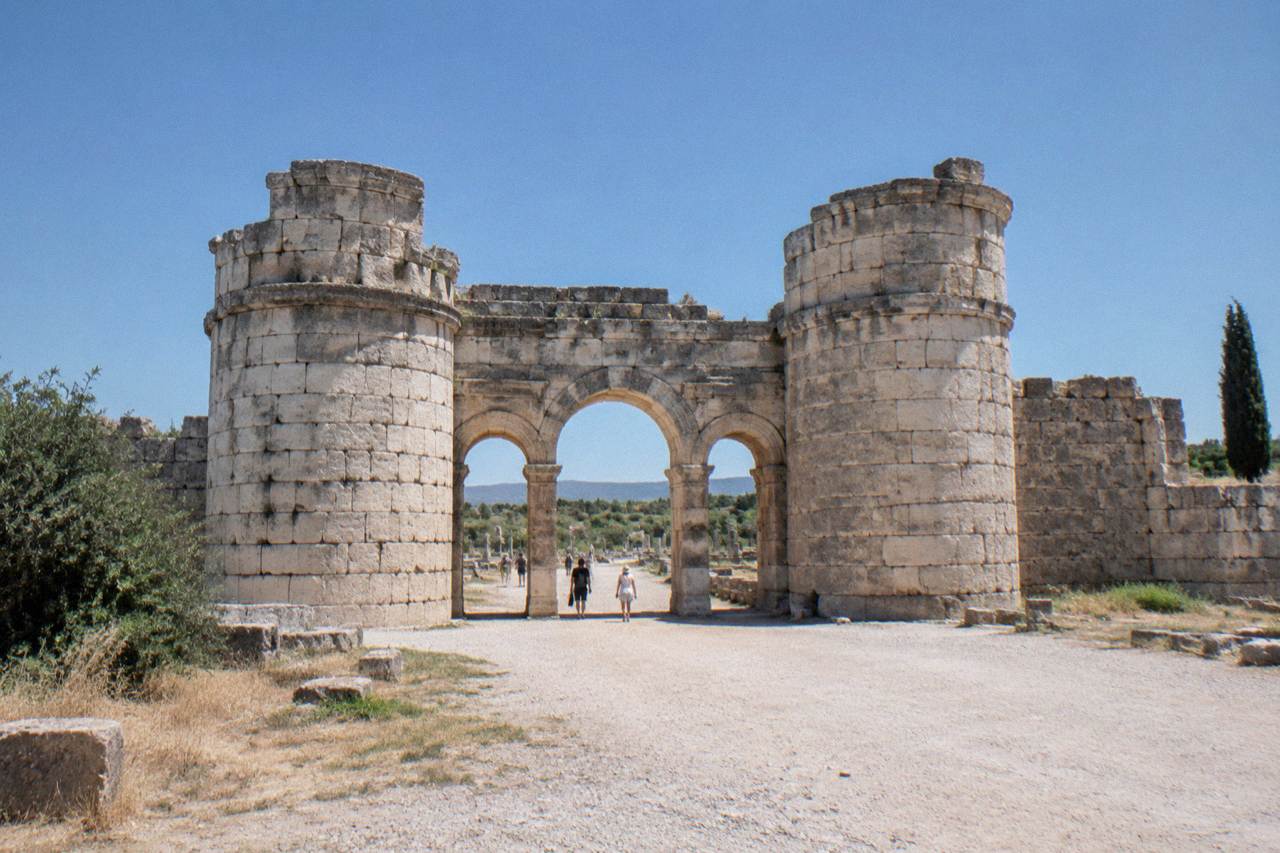
The entrance fee for Perge is EUR 11 for a foreign adult visitor, printed on the Ministry of Culture and Tourism's published foreign-visitor schedule. The site is open every day from 08:00 to 19:00, and the ticket office closes at 18:30. Foreign children aged 8 and under enter free. One important condition travels with the fare: the ancient theatre inside Perge is temporarily closed for restoration, and no reopening date has been stated, so the EUR 11 ticket buys the rest of the site but not the theatre for now.
That is the short answer. The longer answer depends on who is asking, because the Ministry's schedule runs on two separate columns, one for foreign visitors and one for Turkish ID-card holders, and the two do not mix. A visitor holding a MuseumPass has a third arrangement again.
What Does A Foreign Visitor Pay?
A foreign adult visitor pays EUR 11 to enter Perge, on the Ministry of Culture and Tourism's foreign-visitor schedule, and the ticket office takes payment until 18:30 even though the site itself stays open until 19:00. Children aged 8 and under enter free. The fare is printed in euros on the Ministry's schedule, and no other currency figure for Perge appears on any official page.
The EUR 11 figure comes from the Ministry's directive on museum and site entry, the document that sets foreign-visitor prices in euros for every site on the Revolving Fund system. Perge sits on that schedule beside Aspendos at EUR 15, Termessos at EUR 3, Side at EUR 5 for the museum and EUR 7 for the archaeological site, and Phaselis and Olympos at EUR 10 each. The Ministry's own page for Perge carries the site's status and hours, and the directive carries the price, and the two together are the whole official picture of what a foreign visitor pays. No conversion or rounded figure should be trusted, because the schedule prints euros and nothing else.
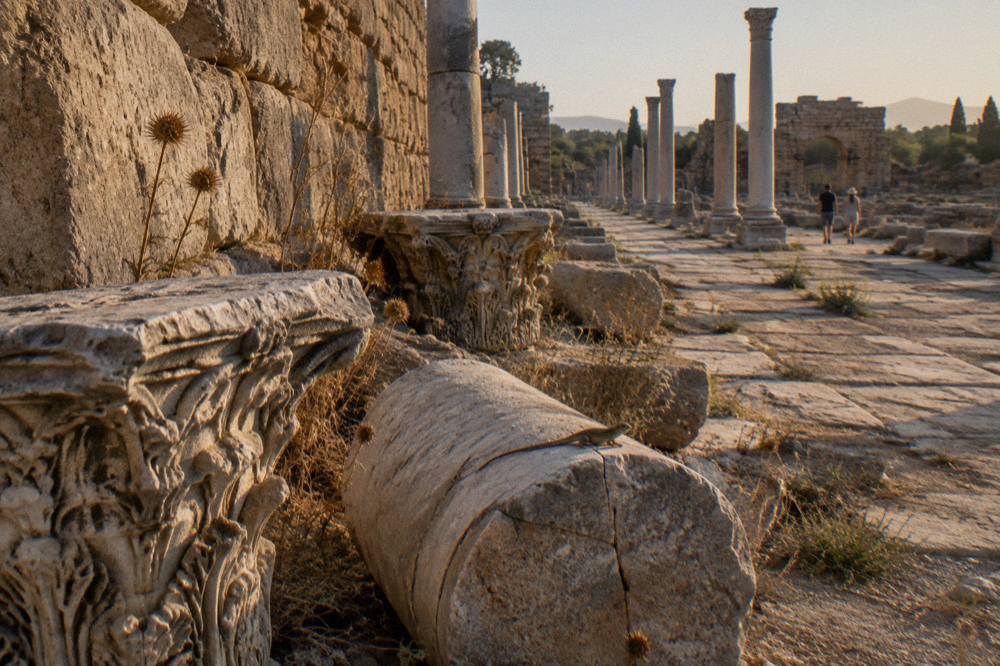
The hours deserve a second look because they are unusual for the region. Perge opens at 08:00 and closes at 19:00 every day of the week, with the ticket office shutting at 18:30, a full half hour before the site closes. Aspendos, by comparison, runs to 22:00 with an audio guide. A traveller planning both sites on one day therefore has a natural order: Perge first, while the ticket office is open, and Aspendos later, since its window runs well into the evening. The Ministry's page for Perge is the place where the site's status and hours are stated, and the Ministry's directive is where the EUR 11 fare is printed.
Here is how the Ministry's foreign-visitor fares stack up across the Antalya region's ancient sites. Each fare is printed separately on the schedule, and the table simply places them side by side.
| Ancient site | Foreign adult fare | Hours stated by the Ministry | Notes on the schedule |
|---|---|---|---|
| Perge | EUR 11 | 08:00 to 19:00 every day, ticket office closes 18:30 | The ancient theatre inside is temporarily closed for restoration |
| Aspendos | EUR 15 | 08:00 to 22:00 every day | Audio guide stated on the site page |
| Termessos | EUR 3 | No hours stated on an official page | A national park fee exists but no official figure is stated |
| Side Museum | EUR 5 | 08:00 to 19:00 | The schedule notes the theatre is closed |
| Side Archaeological Site | EUR 7 | 08:00 to 19:00 | A single ticket for both Side entries is EUR 10 |
| Phaselis | EUR 10 | 08:00 to 19:00 | None stated |
| Olympos | EUR 10 | 08:00 to 19:00 | No price for the Chimera, Yanartas, is printed |
Two conditions on that table matter. First, foreign children aged 8 and under are free at Ministry sites, a rule that comes from the directive's exemptions annex and applies across the schedule, not just at Perge. Second, the fares are for foreign adult visitors only, and the Ministry's schedule carries a separate column for Turkish ID-card holders whose rules are different. Nothing in the foreign column should be read as describing what a Turkish visitor pays, and the reverse holds too.
Is The Theatre Open?
No, the ancient theatre inside Perge is temporarily closed for restoration, and the Ministry's page for the site states the closure without giving a reopening date. The rest of Perge remains open, every day from 08:00 to 19:00, and the EUR 11 fare still applies. A visitor who travels out specifically for the theatre should know that no official page says when the restoration will finish.
The theatre closure is the single most useful thing to know about a Perge trip in 2026, because the theatre is one of the site's headline structures and many travellers plan the visit around it. The Ministry's page for Perge carries the closure plainly, and the schedule notes it beside the fare, which means the ticket and the theatre closure travel together: the site is open, the ticket office is open, and the theatre inside is not part of what the ticket currently reaches. The Ministry gives no reopening date, and no other official page fills that gap, so any date a third-party site quotes for the reopening is a guess rather than a statement.
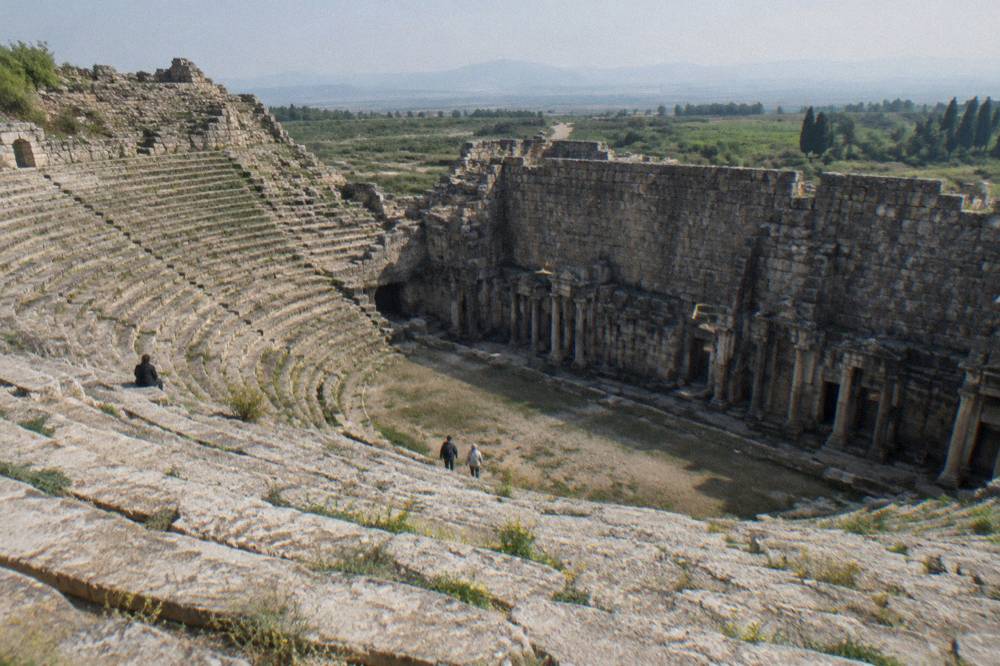
What that means in planning terms is simple. Perge is still a paid, open, working archaeological site, and the parts of it that are open justify the fare for most visitors with an interest in ancient cities. But a traveller whose heart is set on standing inside a Greco-Roman theatre has an alternative in the region, with a caveat of its own: Aspendos, at EUR 15 and open until 22:00, is the region's other great theatre, while the Side schedule notes that the theatre there is closed. Theatre access across the Antalya region is patchy at present, and the Ministry's own page for each site is the way to know the current state of any one of them.
No official page states how long the Perge restoration will run, whether the works are structural or cosmetic, or whether any part of the theatre remains viewable from outside the fence. The Ministry's page states the closure and nothing beyond it. A visitor who wants the theatre specifically should check the Ministry's Perge page close to the day of travel, since the closure is described as temporary and a reopening would be announced there first.
Is Perge Free For Turkish Citizens?
The Ministry's schedule treats Turkish ID-card holders under a separate column from foreign visitors, and that column does not carry the EUR 11 fare. The directive states that Turkish ID-card holders enter Ministry sites on the MuseumPass arrangement or free, depending on the site and the holder's status. A visitor from abroad should never assume the foreign price describes what a local companion pays, because the two regimes are printed apart on purpose.
This is the part of the fee question that causes the most confusion at the gate, and the confusion is understandable: the same turnstile serves both columns, but the columns are different. The Ministry's directive prints foreign-visitor prices in euros in one annex and sets out the Turkish ID-card holder arrangement elsewhere, and the two are never merged on the document. A mixed group arriving at Perge, one foreign passport and one Turkish ID card, will therefore pay differently at the same window, and neither figure describes the other.
For a foreign visitor planning a trip with Turkish friends or family, the practical step is to let each person present their own document at the ticket office and let the staff apply the correct column. Guessing, or offering the foreign fare for a Turkish ID holder, simply creates a correction at the window. What this page can state is only what the directive states: the foreign adult fare is EUR 11, foreign children aged 8 and under are free, and Turkish ID-card holders are governed by the other column.
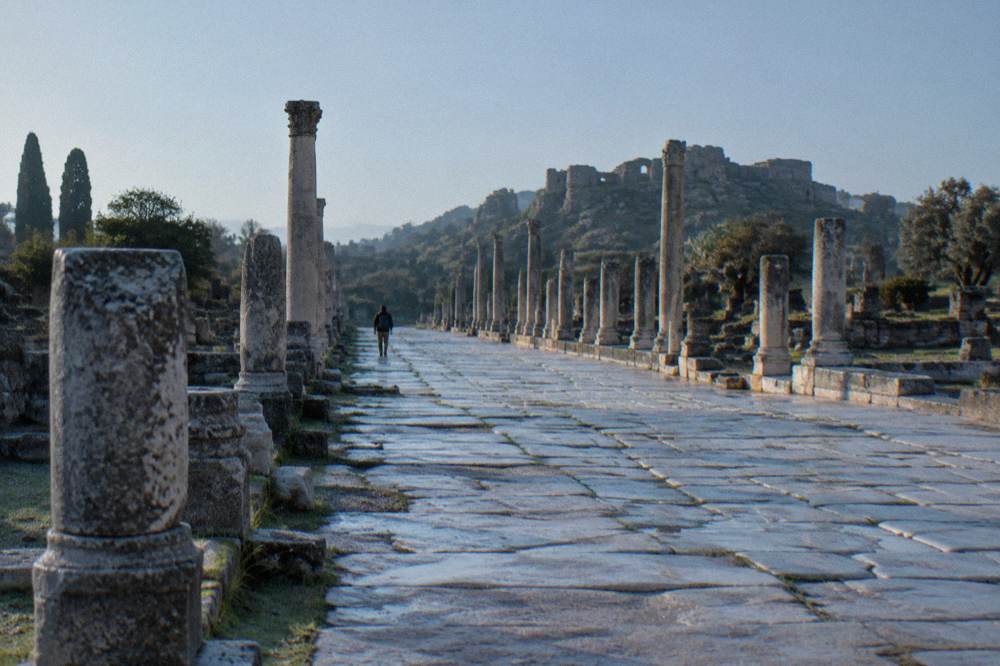
One more distinction belongs here because it sits in the same quarter of the fee question. The Ministry's schedule is not the only pricing regime in the Antalya region, and the Ministry's rules never describe another operator's site. The Kaleici Museum in the old town, for example, is run by Koc University's AKMED and charges adult TRY 80 with its own concession rules, and MuseumPass does not apply there. The Ministry's free museums, the Mevlevihane Museum, the Antalya Ethnography Museum and the Antalya Ataturk House Museum, are free on the Ministry's schedule and have nothing to do with Perge's fare. Three bodies, three rulebooks, and a traveller who assumes one rulebook covers everything will meet a surprise at one of the doors.
Does The Mediterranean Pass Cover It?
Yes, MuseumPass is accepted at Perge, which is a paid Ministry of Culture and Tourism site, and the Mediterranean pass is the region-focused option at EUR 90 for 7 days while MuseumPass Turkiye runs at EUR 165 for 15 days. A pass substitutes for the EUR 11 Perge fare at the gate, but the pass prices are printed as the Ministry's directive states them and no pass arithmetic appears on any official page.
The two passes serve different trips. MuseumPass Mediterranean, at EUR 90 for 7 days, is the one aimed at a stay within the Mediterranean region, and Antalya's Ministry sites, Perge and Aspendos among them, fall inside it. MuseumPass Turkiye, at EUR 165 for 15 days, covers the wider national network and suits a trip that pairs Antalya with sites elsewhere in the country. The Ministry's directive prints both prices and states they apply as of 01.03.2024, and those are the only pass figures any official page carries.
Perge at EUR 11, Aspendos at EUR 15, Side at EUR 5 and EUR 7 or EUR 10 as a single ticket, Phaselis at EUR 10 and Olympos at EUR 10: a visitor planning several of these inside a 7-day window can compare that list against the EUR 90 Mediterranean pass directly, and a visitor planning one or two sites will usually find the single fares are the simpler route. The pass also changes nothing about the theatre closure at Perge, since a pass, like a ticket, buys the site as it currently stands.
| Pass or ticket | Price stated by the Ministry | Validity | Covers Perge? |
|---|---|---|---|
| Single ticket at the gate | EUR 11 | One entry to Perge | Yes, one visit |
| MuseumPass Mediterranean | EUR 90 | 7 days | Yes, accepted at paid Ministry sites |
| MuseumPass Turkiye | EUR 165 | 15 days | Yes, accepted at paid Ministry sites |
| Child aged 8 and under | Free | Applies at the gate | Enters free without a pass |
Two boundaries on the pass are worth stating plainly. MuseumPass is a Ministry product, so it applies at Ministry-run sites, and the region's non-Ministry attractions, from the Kaleici Museum's TRY 80 AKMED ticket to the harbour boat trips and the paid beach concessions, sit outside it entirely. And the pass is a paid product like any other, so the free things in Antalya stay free without it: Hadrian's Gate, the Clock Tower and Republic Square, the old harbour edge, the Kaleici streets and the parks all cost nothing to walk or see, pass or no pass, as the Free Things To Do In Antalya guide sets out in full.
On the guided-walk side of a Perge day: the free walking tours in Antalya cover the Kaleici old town, not the ancient sites outside the city. Five free walking tours run in Antalya, four listed on GuruWalk and one on freetour.com, and all four GuruWalk walks are Kaleici circuits, so no guided walk visits Perge. For the old town half of the trip, the 1-Hour 30-Minute Tales And Trails walk, led by Mehmet and starting at Hadrian's Gate, is rated 4.99 out of 5 across 134 GuruWalk reviews, and its GuruWalk page carries the meeting point and the free, pay-what-you-want terms. The wider picture of what is free and what is paid across the city is in the guide to Perge's entry fee and how it fits the region's sites, and the pass decision is worked through in whether MuseumPass is worth it in Antalya.
A few practical points follow from the figures above. The 7-day clock on the Mediterranean pass is the number to check first, because a pass bought on the first morning of a week-long stay needs to cover every paid Ministry site inside that single window, and the EUR 90 only pays off when the single fares a visitor actually pays add up to more than the pass itself. Working from the stated fares, Perge at EUR 11 and Aspendos at EUR 15 come to EUR 26 together, Phaselis and Olympos add another EUR 20, and the Side ticket options run from EUR 5 up to EUR 10 as a single ticket, so the arithmetic depends entirely on how many of these a trip genuinely includes. A visitor walking only Perge and Aspendos pays less at the gate than the pass costs, while a visitor adding Phaselis, Olympos and Side moves the total toward and past the pass price. The same logic applies to the Turkiye pass at EUR 165 for 15 days, which only makes sense when the longer validity matches a longer trip and the itinerary reaches Ministry sites beyond the Mediterranean region.
Two more details from the same figures. The free entry for children aged 8 and under applies at the gate, so a family pays single fares only for those over that age, and the pass question is an adult-and-older-child question rather than a whole-family one. And since the Ministry's directive dates both pass prices as of 01.03.2024, and no official page carries any other pass figures, any price seen elsewhere that differs from EUR 90 or EUR 165 is not a Ministry-stated number, and the gate fare of EUR 11 for Perge remains the figure to check against on the day of the visit.
One more way to frame the choice: the Mediterranean pass at EUR 90 equals roughly eight Perge entries, or six Aspendos entries at the stated EUR 15 fare, so the pass only earns its price on an itinerary with real density of paid Ministry sites. A trip built around Perge plus Aspendos plus one further site still sits below the pass at EUR 26 plus a single fare, while a trip that also reaches Phaselis and Olympos, at EUR 10 each, brings the running total to EUR 46 before Side is counted at all. Once Side enters the plan at EUR 5 to EUR 10 as a single ticket, the gap to EUR 90 narrows further, and that is the point where the 7-day validity starts to matter as much as the price, since every one of those entries has to fall inside the same seven days.
The date stamp of 01.03.2024 also gives the pass figures a shelf life worth watching. Because the Ministry's directive is the only official source for EUR 90 and EUR 165, a visitor checking prices months after that date should treat those two numbers as the last stated figures rather than as guaranteed current ones, and the EUR 11 Perge gate fare carries the same caveat. The practical habit is to confirm the fare at the gate on the day of the visit, since that is where the single ticket is actually sold, and to weigh the pass decision against the fares as they stand then, not against any figure quoted on a third-party booking page.
Common Questions About The Perge Entrance Fee
What Is The Entrance Fee For Perge?
The entrance fee for Perge is EUR 11 for a foreign adult visitor, on the Ministry of Culture and Tourism's published foreign-visitor schedule. The site is open every day from 08:00 to 19:00, and the ticket office closes at 18:30. Foreign children aged 8 and under enter free.
Is the ancient theatre inside Perge open?
No. The theatre is temporarily closed for restoration, and the Ministry's page for Perge states the closure without giving a reopening date. The rest of the site remains open on its stated hours, and the EUR 11 fare still applies.
Do Turkish citizens pay the EUR 11 fare?
The Ministry's schedule carries a separate column for Turkish ID-card holders, and the EUR 11 figure belongs to the foreign-visitor column only. The directive states that Turkish ID-card holders enter Ministry sites on the MuseumPass arrangement or free, depending on the site and the holder's status.
Does MuseumPass cover Perge?
Yes. MuseumPass is accepted at the Ministry's paid sites, including Perge. MuseumPass Mediterranean is EUR 90 for 7 days and MuseumPass Turkiye is EUR 165 for 15 days, as the Ministry's directive prints them.
Are children free at Perge?
Foreign children aged 8 and under enter Ministry sites free, a rule from the directive's exemptions annex that applies across the schedule and not only at Perge.
Can I visit Perge and Aspendos on the same day?
Yes, and the stated hours make the order natural. Perge opens at 08:00 and its ticket office closes at 18:30, while Aspendos is open until 22:00 with an audio guide, so Perge first and Aspendos later is the arrangement the official hours support.